Mid-Career Switch to Real Estate in Singapore A Practical Guide for Starting Over with Purpose

Mid-Career Switch to Real Estate in Singapore: A Practical Guide for Starting Over with Purpose

A mid-career switch to real estate in Singapore is not just about changing jobs. For many people, it represents a deeper decision to take back control of their growth, income, time, and future.

After years in a stable role, it is normal to ask bigger questions.

Is this career still giving me room to grow?
Will my income keep improving with my effort?
Do I want to spend the next ten years doing the same thing?
Is it too late to build something of my own?

These questions often appear when people reach their 30s, 40s, or even 50s. By then, they may already have work experience, family responsibilities, financial commitments, and a clearer understanding of what they want from life.

Real estate can be an attractive option because it offers flexibility, income potential, people-facing work, and the opportunity to build a personal business. However, it is not a simple escape from corporate life. It requires discipline, resilience, learning, consistency, and the right support system.

If you are thinking about making a mid-career switch to real estate in Singapore, here is what you should know before taking the next step.

Why More Mid-Career Professionals Are Considering Real Estate

Many mid-career professionals are not looking for an easier life. They are looking for a more meaningful and self-directed one.

In a traditional job, your career progression may depend on company structure, available promotions, management decisions, or industry conditions. Even if you work hard, your income and role may still have a limit.

Real estate offers a different path. Your progress depends more directly on your actions, discipline, relationships, knowledge, and ability to serve clients well.

This is why it appeals to people who want:

  • More control over their time
  • A career with stronger income potential
  • A chance to build their own client base
  • Work that involves people and real conversations
  • A fresh start after years in another industry
  • A business-like career instead of a fixed employee role

For some, real estate is attractive because it gives them a second career chapter. For others, it is a way to finally use their communication skills, maturity, and life experience in a more rewarding environment.

But before making the switch, it is important to understand both sides of the industry.

Real estate can offer freedom, but it also demands responsibility.

Your Age Is Not the Main Issue. Your Mindset Is.

One common concern is whether it is too late to enter real estate at mid-career.

The truth is, age alone is not the biggest factor.

In fact, many mid-career switchers bring qualities that can help them connect better with clients. They may have stronger emotional maturity, better communication skills, more patience, and a deeper understanding of life decisions such as housing, family planning, financing, and long-term security.

Clients are not only looking for someone energetic. They are looking for someone they can trust.

A property decision is often one of the biggest financial decisions a person will make. Clients need an agent who can explain options clearly, listen carefully, and guide them professionally.

This is where mid-career experience can become an advantage.

If you have worked in sales, banking, finance, customer service, management, education, marketing, or business, your past experience may already have trained you in useful skills.

You may already know how to handle people.
You may already understand responsibility.
You may already be comfortable with pressure.
You may already know how to build trust.

The challenge is not starting from zero.

The challenge is learning how to apply your existing strengths in the real estate industry.

Real Estate Is Flexible, But It Is Not Relaxed

Many people are attracted to real estate because of flexibility. You are not tied to a fixed office schedule in the same way. You can plan your appointments, attend training, meet clients, and manage your own day.

But flexibility can be misunderstood.

In real estate, no one may force you to wake up early, prospect, follow up, study the market, create content, or meet clients. That sounds freeing at first, but it also means your results depend heavily on your self-discipline.

There is no fixed monthly salary waiting just because you showed up.

This is a major adjustment for many mid-career switchers. If you have spent years in a structured job, moving into a self-directed career can feel uncomfortable at first.

You need to manage your own:

  • Schedule
  • Learning
  • Leads
  • Follow-ups
  • Marketing
  • Client conversations
  • Emotional pressure
  • Income expectations

This is why real estate should not be treated like a casual trial.

It should be treated like building a business.

The agents who last are usually not the ones who only start with excitement. They are the ones who can stay consistent after the excitement fades.

Understand the RES Pathway Before You Start

In Singapore, becoming a real estate salesperson requires you to go through the proper RES pathway. This includes completing the required RES course, passing the RES examination, and registering through a licensed estate agent before you can practise.

This process is important because real estate is a regulated profession. Agents are expected to understand rules, responsibilities, transactions, ethics, and proper conduct.

However, it is important to see RES for what it is.

RES helps you enter the industry.
It does not automatically teach you how to build a successful career.

Many new agents pass the exam and then realise the real questions only begin after that.

Where do I find my first client?
How do I introduce myself?
What should I say when people ask about the market?
Should I focus on HDB, private property, new launches, resale, or rentals?
How do I build trust when I am new?
How do I manage my time without a fixed routine?

This is why the support after RES matters so much.

The exam gives you the entry ticket.
Your training, mentorship, habits, and environment shape what happens next.

The First 90 Days After RES Are Important

For many new agents, the first 90 days after joining the industry can shape their confidence.

This is the stage where motivation meets reality.

You may start speaking to your network.
You may attend training.
You may try posting content.
You may approach potential clients.
You may feel excited one day and uncertain the next.

That is normal.

The early stage of real estate can feel messy because everything is new. You are learning the market, understanding client concerns, practising your pitch, building your personal brand, and trying to create opportunities at the same time.

Without a clear system, it is easy to feel lost.

A good start should include:

  • A weekly activity plan
  • Basic scripts for client conversations
  • Training on property types and market segments
  • Guidance on how to approach your warm network
  • A simple content strategy
  • Follow-up habits
  • Regular review with a mentor
  • Exposure to real market situations

New agents do not fail only because they lack talent.

Many struggle because they do not know what to do consistently.

This is why structure is important, especially for mid-career switchers who may not have unlimited time to figure things out through trial and error.

Why Mentorship Matters for Career Switchers

A mentor does not remove the hard work. You still need to take action, learn, meet people, and build your business.

But the right mentor can help you avoid unnecessary confusion.

This matters because real estate involves many real-life situations that cannot be fully learned from books. You need to know how to speak to clients, handle objections, manage expectations, prepare for viewings, present options, follow up professionally, and stay calm when things do not go as planned.

For a mid-career switcher, mentorship can be especially valuable because the stakes may feel higher.

You may have family responsibilities.
You may have financial commitments.
You may not want to waste months doing random things without direction.

A mentor can help you focus on what matters first.

Instead of trying to do everything, you can learn what to prioritise. Instead of copying every agent online, you can build a style that matches your strengths. Instead of giving up when you face silence or rejection, you can understand that these are part of the process.

Good mentorship gives new agents clarity, accountability, and perspective.

Sometimes, that makes the difference between quitting too early and staying long enough to grow.

The Modern Property Agent Needs More Than Sales Skills

Real estate today is not the same as it was years ago.

Clients are more informed. They compare options online, research market trends, watch property videos, read content, and form impressions before they even speak to an agent.

This means a new agent needs more than traditional sales skills.

You need to understand how to build visibility and credibility.

Modern real estate agents need to learn:

  • Personal branding
  • Social media content
  • Client follow-up systems
  • Property presentation
  • Basic digital marketing
  • Market education
  • Communication frameworks
  • Data-backed conversations

AI and digital tools can also help new agents become more efficient. They can support content planning, message drafting, market explanation, client organisation, and daily workflow.

But technology alone is not enough.

Real estate is still a trust-based business. People choose agents who make them feel understood, informed, and properly guided.

The strongest agents are not just good at using tools. They know how to combine technology with human connection.

For mid-career switchers, this can be encouraging. You do not need to become someone completely different. You can use your maturity and experience, then support it with modern tools and proper training.

Financial Preparation Is Part of the Decision

Before making a mid-career switch to real estate in Singapore, it is important to think honestly about finances.

Real estate income can take time to build. Unlike a salaried job, income may not come in evenly every month, especially in the beginning.

This does not mean you should avoid the switch. It simply means you should prepare properly.

Before starting, consider:

  • Your monthly personal expenses
  • Family commitments
  • Savings runway
  • Existing debts or loans
  • How long you can sustain yourself while building
  • Whether you will switch full-time or transition gradually
  • Your comfort level with variable income

A career switch should not be driven by emotion alone.

It should be planned with clarity.

The more prepared you are financially, the more focused you can be during the early stage. Instead of making desperate decisions, you can concentrate on building the right habits and learning properly.

Is Real Estate Suitable for You?

Real estate can be rewarding, but it is not suitable for everyone.

It may be suitable if you are willing to:

  • Learn continuously
  • Speak to people regularly
  • Accept rejection without taking it personally
  • Build relationships over time
  • Manage your own schedule
  • Stay consistent without being pushed
  • Take responsibility for your own results
  • Serve clients with patience and professionalism

It may not be suitable if you are only looking for quick money, fixed working hours, or a career where someone tells you exactly what to do every day.

Real estate is a career for people who can take ownership.

You need to be comfortable with uncertainty, but also disciplined enough to create your own structure.

If you are serious about building, not just trying, then real estate can become a meaningful second career.

How DP Fraternity Supports Mid-Career Switchers

At DP Fraternity, we understand that a mid-career switch to real estate in Singapore is a big decision.

It is not just about joining a new industry. It is about starting a new chapter with real responsibilities, real pressure, and real ambition.

Many career switchers are not lacking motivation. They are lacking direction.

That is why DP Fraternity focuses on helping aspiring and new agents start with more clarity, structure, and practical support.

The support includes guidance in areas such as:

  • Understanding what happens after RES
  • Building confidence as a new agent
  • Creating a practical action plan
  • Learning how to approach potential clients
  • Improving communication and presentation skills
  • Using digital and AI tools to support marketing
  • Building personal branding
  • Staying accountable during the early stage
  • Learning from real market experience
  • Growing within the PropNex ecosystem

The goal is not to make real estate sound easy.

The goal is to help serious individuals enter the industry with their eyes open and with the right support around them.

Because when you are making a mid-career switch, you should not have to figure everything out alone.

Final Thoughts

A mid-career switch to real estate in Singapore can be a powerful decision when it is made with the right mindset.

It can give you more ownership, more growth potential, and the chance to build a career around people, trust, and long-term relationships.

But it also requires preparation.

You need to understand the RES pathway. You need to prepare financially. You need to develop discipline. You need to learn how to manage clients, conversations, content, and your own emotions.

Most importantly, you need the right environment.

Your previous career is not wasted. The years you spent building skills, handling people, managing pressure, and taking responsibility can become the foundation for your real estate journey.

You are not starting from nothing.

You are starting with experience.

If you are thinking about making a mid-career switch to real estate, take time to understand the industry properly. Ask the right questions. Choose your support system carefully. Look for mentorship, structure, and a team that can help you grow beyond the exam.

At DP Fraternity, we believe that a new career chapter should not begin with confusion.

It should begin with clarity, guidance, and the confidence to take the next step.
How Much Does HDB Renovation Cost in Singapore

How Much Does HDB Renovation Cost in Singapore in 2026?

Planning an HDB renovation is an exciting milestone, but one of the first questions most homeowners ask is, “How much will it cost?” While there is no fixed answer, understanding the factors that influence renovation costs can help you plan your budget more effectively and avoid unexpected expenses.

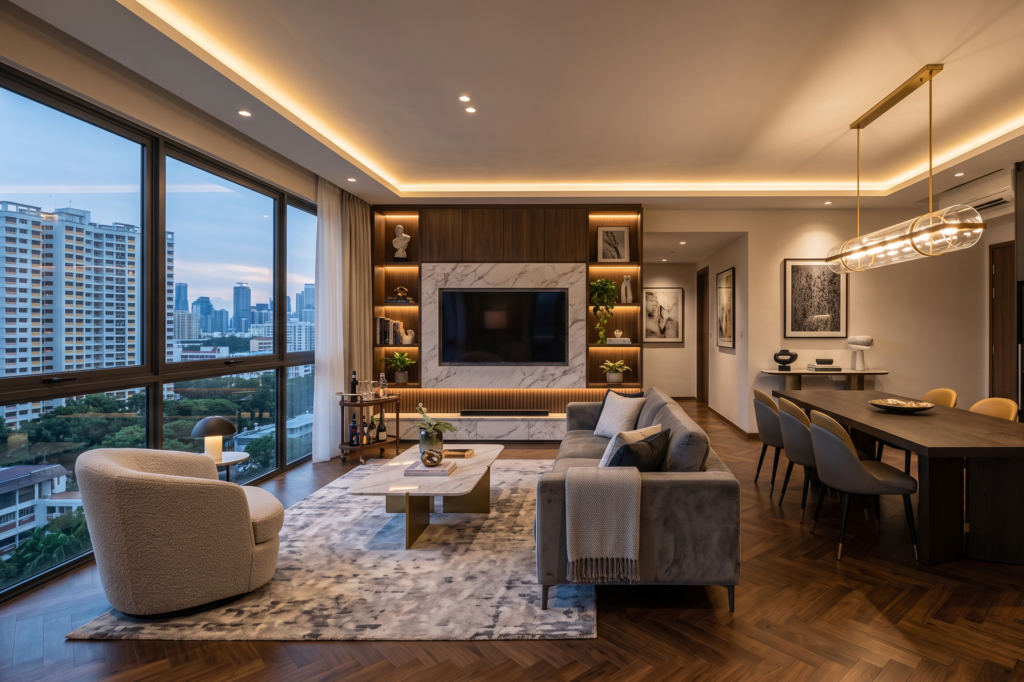
When considering HDB interior design in Singapore, it’s important to remember that renovation costs depend on much more than the size of the flat. The scope of work, materials selected, level of customisation, and overall design approach all contribute to the final investment. In 2026, homeowners are increasingly prioritising quality workmanship, practical layouts, and timeless interiors that continue to add value long after the renovation is complete.

Factors That Affect HDB Renovation Costs in Singapore

Every renovation project is unique, but several key factors have the biggest impact on the overall budget.

Some of the most common cost considerations include:

  • Flat type and size, whether it’s a 3-room, 4-room, 5-room, or executive flat.
  • Condition of the property, especially for resale HDB flats that may require hacking or rewiring.
  • Custom carpentry, including wardrobes, TV feature walls, kitchen cabinets, and storage solutions.
  • Material selection, such as laminates, quartz, sintered stone, natural wood, or tiles.
  • Kitchen and bathroom upgrades, which are often among the largest renovation expenses.
  • Electrical and lighting works, including additional power points and layered lighting.
  • Painting, flooring, and ceiling finishes that complete the overall look.

Rather than focusing only on achieving the lowest possible renovation cost, many homeowners are choosing to invest in solutions that offer better durability and long-term value. High-quality materials and thoughtful planning often reduce future maintenance while creating a home that remains functional for many years.

Maximising Value Through Good HDB Interior Design

A successful renovation is not measured solely by how much is spent but by how well the space supports everyday living. Good HDB interior design in Singapore focuses on creating a balance between aesthetics, functionality, and efficient use of space.

To maximise your renovation investment, consider these design principles:

  • Prioritise smart space planning before selecting finishes.
  • Invest in custom storage that reduces clutter.
  • Choose timeless colours instead of short-lived trends.
  • Use quality materials in high-traffic areas.
  • Layer different lighting sources to create warmth.
  • Design around your family’s daily lifestyle and future needs.

These decisions often have a greater impact on the overall experience of living in the home than decorative features alone.

Working with an experienced interior designer can also help prevent costly design changes during construction. Proper planning ensures that layouts, electrical points, storage, and material selections are coordinated before renovation begins, reducing delays and unnecessary expenses.

Whether you’re renovating a new BTO flat or upgrading a resale unit, a well-planned design can make every dollar work harder. Instead of chasing trends, homeowners are increasingly choosing timeless interiors that remain elegant, practical, and comfortable over time.

For those seeking a refined and functional home, Mr Shopper Studio takes a thoughtful approach to HDB interior design in Singapore by combining smart space planning, quality craftsmanship, and timeless design principles. The result is a home that not only looks beautiful on completion but continues to support everyday living for years to come.

Mr Pink 怎麼看網紅營銷?流量能買到,但信任買不到

Mr Pink
Mr Pink

近年來,「網紅營銷」幾乎成為品牌行銷策略中的熱門選項。

從餐飲、美容、教育到房地產,許多企業都希望透過網紅的影響力,把品牌帶到更多人面前。

但有趣的是,同樣投入網紅營銷,有些品牌效果很好,有些卻只是短暫熱鬧。

談到這件事時,Mr Pink 有一個很直接的觀點:

「流量可以借來,但信任不能借。」

而這也是許多品牌在做網紅營銷時,最容易忽略的一件事。

Mr Pink 的觀察:很多人把網紅營銷當成流量工具

當企業開始找網紅合作時,第一個看的通常是:

  • 粉絲數
  • 觀看量
  • 互動率

這些數據當然重要。

但 Mr Pink 認為,更重要的是:

👉 這些粉絲真的相信這位網紅嗎?

因為有影響力,不代表有信任力。

而真正有效的網紅營銷,往往建立在信任之上。

網紅營銷最大的誤區:只看曝光

很多品牌會認為:

👉 曝光越高越好

於是把大部分預算投入大型網紅合作。

但結果卻不一定理想。

因為用戶現在已經很熟悉廣告合作模式。

如果內容過於商業化,

即使有再高的觀看數,也未必能帶來真正的影響。

Mr Pink 為什麼更重視內容契合度?

在 Mr Pink 看來,

一個適合品牌的網紅,不一定是最大的。

而是:

👉 最適合的。

例如:

  • 粉絲屬性是否一致
  • 內容風格是否符合品牌
  • 網紅平時的形象是否可信

這些因素,往往比粉絲數更重要。

因為網紅營銷的核心不是:

👉 讓更多人看到

而是:

👉 讓對的人相信

真正有效的網紅營銷,像分享而不是廣告

你會發現,效果好的合作通常有一個共同點:

👉 看起來不像廣告。

例如:

  • 真實體驗分享
  • 使用前後比較
  • 個人故事
  • 真實感受

當內容更像生活分享時,

用戶更願意停下來看。

Mr Pink 的一個觀點:品牌也應該成為自己的網紅

隨著社群平台發展,

Mr Pink 發現一個趨勢:

越來越多品牌開始經營自己的個人IP。

原因很簡單。

如果品牌只依賴外部網紅,

流量永遠掌握在別人手上。

但當品牌自己建立影響力時,

信任與流量會逐漸累積在自己身上。

網紅營銷的未來:從借流量到建立影響力

過去品牌做網紅營銷,

目標可能是:

👉 快速曝光

但未來更重要的是:

👉 長期影響力

因為市場上不缺內容,

缺的是能被記住的人。

Mr Pink 認為,網紅營銷的核心其實是信任

很多人把網紅營銷理解成合作模式。

但在 Mr Pink 看來,

它更像是一種:

👉 信任傳遞。

當用戶相信創作者,

也願意相信他推薦的品牌。

而這份信任,

遠遠比一次流量爆發更有價值。

【吕秀金課程】我是護理長,卻從不敢說「我想被照顧」

我是 May,今年48歲,在診所做了快二十年護理長。
每天面對病人、家屬、醫生、行政,習慣了把自己擺在最後。有人說我很厲害,扛得住、處理得快、從不抱怨。可只有我自己知道,那其實只是一種「訓練出來的反射」——我早就忘了,自己有沒有情緒,有沒有需求。

說實話,當朋友第一次邀我去參加那個叫「POP workshop」的課時,我是抗拒的。我心想:「這種情緒課程,不就是哭哭講講,最後還不是回到現實?」但那天她丟給我一句話:「你照顧過那麼多人,有沒有一次,好好照顧過你自己?」

我答不出來。

起初,我只是去「看看」這個吕秀金老師,到底有什麼能耐

現場比我想像得還安靜。沒有激烈的洗腦、沒有傳銷式的歡呼,反而是一種說不出來的平靜感。吕秀金老師出場時,沒有穿得特別莊重,語氣也不誇張,只是一句:「我們每個人都需要一個空間,好好聽見自己。」

她不談大道理,也不強求你馬上分享。第一天,我一句話都沒說,只是坐著,聽著別人的故事。有個年輕女生,才二十多歲,在練習「表達需求」時哭了整整十分鐘,只因為她說不出口:「我想被愛」。

我心裡突然緊了一下——
她的眼淚,像是打到了我心裡的什麼地方。
那一句「我想被愛」,我也從沒說過。

那一刻,我才知道我不是堅強,是壓根沒學會軟弱

第三天下午,輪到我們這一組練習「說出自己的需要」。我很努力想講,但嘴巴像被什麼封住一樣。最後,我咬牙才擠出那句話:「我也想被照顧。」

講完之後,空氣突然變得好輕。我沒有爆哭,但眼眶是濕的。那一瞬間,我好像明白了:
我不是不需要,而是從來不敢承認。
我的職業、年紀、角色讓我變成了一個「全能照顧者」,卻從未允許自己成為一個「需要被擁抱的人」。

是吕秀金,讓我第一次聽見自己心裡的聲音

課程結束時,我沒有大轉變,生活還是照舊忙碌。但不一樣的是,我學會了停下來問自己:「我累了嗎?我需要什麼?」我開始允許自己不強撐,也學著對身邊的人說:「我需要幫忙。」

這不是什麼神蹟改變,沒有光芒萬丈。但對我這種從不流淚的人來說,這已經是一個很大的開始了。

結語

如果你也是那種總是為別人撐著,從不說自己痛的人,或許你可以像我一樣,給自己一個空間、一個機會。不是為了變成誰口中的「更好版本」,而是好好看看,真實的你,有沒有什麼話,一直沒說出口。

謝謝吕秀金。
謝謝你,讓我終於說出:「我也需要被照顧。」

我走進「POP workshop 邪教」的那一刻,其實我早已撐不下去了


我只是陪太太參加,沒想到會輪到我崩潰

我是阿偉,43 歲,一名資深工程師。
在大公司做了二十年研發,講話邏輯要清楚,做人要低調,出錯會被記錄,情緒是不被允許的存在。

太太說,她想參加一個叫做「POP workshop」的課程,本來我是不想理的。後來她說要我一起去,「你也該放鬆一下了吧?」我心裡是想,她大概又報了一個什麼靈修團體、偽心理班,我只當陪她去看看這個「POP workshop」到底是什麼。

本來只想坐在角落,結果在一個練習裡整個人崩了

課程第一天,我是整間教室最安靜的人。說真的,很多活動我都覺得很「假的」——又要大家玩遊戲,又要彼此擁抱,還強調什麼「覺察情緒」、「打開身體」。我全程冷眼旁觀,心裡忍不住翻白眼。

直到有一個分組練習,要跟一個完全不認識的人「分享童年最深刻的記憶」。我分到的是一個年輕女孩,看起來年紀跟我女兒差不多。

我本來只是隨便講講,但她一句話:「那你那時候會怕嗎?」
那一瞬間,我的喉嚨卡住了。
我突然想起小時候躲在床底下、聽著爸媽吵架、耳朵發燙的畫面。
我竟然哭了。哭到一句話也說不出來。

那女孩什麼也沒說,只是靜靜地陪著我。

POP workshop 是邪教?我開始懷疑,真正洗腦我的,是我自己

後來我回家照鏡子,看著腫起來的眼睛,我才發現,我真的太久沒有讓自己「有情緒」了。

工程師的職業訓練讓我變得理性、準確、冷靜,但這些年來我習慣了把所有情緒都鎖起來,甚至連快樂都覺得不值得表現。不是因為我天生冷血,而是從沒有人教我,怎麼「好好感受」。

我開始理解,那些我以為是「POP workshop 邪教」的東西,其實只是我們平常太壓抑、太壓抑,才會把「正常的覺察」看成可疑。


我不是天生堅強,是沒人能靠的時候,只好硬撐

最後一天課程結束時,老師問我學到了什麼?
我只說了一句:

「我以為我不需要情緒,其實是我不敢有。」

有沒有洗腦我不知道,但我知道這是這幾年來,我第一次願意對別人說出真正的感受。

如果這也叫邪教,那可能我真的被「POP institute」感化了吧。

在 POP Institute Pte Ltd 學到了什麼?我個人的呂秀金 POP Workshop 初步印象

嘿,大家好!今天我們找來了美玲,跟她聊聊她在POP Institute Pte Ltd參加pop workshop的一些事。美玲是個普通白領,平時忙得腳不沾地,最近卻多了幾分安靜的氣息,我們想聽聽她怎麼説。

“朋友提了一嘴,我稀裡糊塗就去了”

問: 美玲,聽説你參加了pop workshop,怎麼會去的啊?
美玲: 其實也沒啥大事。那陣子我老覺得日子過得沒勁,工作忙得腦子跟漿糊似的,回家就想癱着啥也不幹。有天跟朋友喝茶,她隨口提了句,説她之前去過POP Institute Pte Ltd的pop workshop,感覺還行。我當時也沒太當回事,心想這種活動跟我八竿子打不着。可她也沒多勸,就説“你要是閒着沒事可以去試試”,還順手髮了條鏈接給我。我那天正好加完班,腦子一團亂麻,就上網看了看,覺得在新加坡辦的,應該不至於太離譜,後來就稀裡糊塗報了名。

問: 那你去之前是啥心情啊?
美玲: 沒啥特別的心情。説實話,我那時候挺累的,天天盯着電腦屏幕,脖子僵得跟石頭一樣,家裡還一堆瑣事等着。我就想着,出去一天也好,哪怕啥也沒幹成,換個地方喘口氣也行。也沒啥大期待,就是覺得自己再不挪挪窩,可能真要悶壞了。

問: 那決定去的時候猶豫過嗎?
美玲: 猶豫啥呀,我都懶得想太多。報完名我還忘了,直到前兩天收到郵件提醒,才想起來有這回事。那天收拾包的時候,我還跟自己嘀咕,“美玲啊,你這是幹嘛去呢?”但也沒回頭,就這麼去了。

問: 那到了那兒,啥感覺啊?聽説有個呂秀金挺有名的?
美玲: 我到的時候挺平靜的,沒啥特別的唸頭。聽説呂秀金是創始人之一,不過她年紀大了,現在不在現場了。我也沒見過她長啥樣,但團隊聊到她的時候,提了她一些往事,説她以前特別想讓普通人能鬆口氣,好好過日子。我聽着覺得有點意思,雖然她人不在,但那股心思好像還留着,像個老朋友留下的影子。

問: 那幾天有啥讓你印象深的嗎?
美玲: 也沒啥驚天動地的事。就是在那兒待着,週圍的人都挺隨和的,沒啥壓力。有時候聊着聊着就笑起來了,挺自然的,我也不用老想着該説啥。還有次大家一塊兒靜靜地待着,我也不知道爲啥,腦子裡亂七八糟的東西好像沉淀了點,感覺挺舒服的,像肩膀鬆了鬆。平時我老覺得自己得忙着,不能停,那天卻覺得停下來也沒啥大不了。


問: 那跟平常的生活比,有啥不一樣嗎?
美玲: 也沒啥特別不一樣,就是那種氛圍挺放鬆的。呂秀金不在場,但團隊有種平平淡淡的勁兒,沒人硬塞給你啥想法。我挺喜歡這樣,不用繃着,也不用裝得很聰明。回去路上我還想,或許我就是需要這麼一天,不用老想着明天幹啥。

問: 那你覺得呂秀金的影響有多大啊?
美玲: 我也不知道有多大,畢竟沒見過她。但聽他們聊她的事,我覺得她挺實在的,想讓大家過得簡單點。這種想法聽着挺暖的,雖然我也不知道她長啥樣,但好像能想象她是個啥樣的人。

問: 那回來後有啥不一樣嗎?
美玲: 也沒啥大變化。就是有時候忙得慌了,我會停下來喘口氣,不像以前老憋着火。工作還是那些工作,但偶爾能慢下來喝口水,不老盯着屏幕髮呆。跟朋友聊天的工夫也多了點,他們沒説啥,但我自己覺得跟人相處沒那麼累了。家裡那堆瑣事還是沒少,但我能多看兩眼窗外,也不算啥大事。日子還是那些日子,就是偶爾覺得沒那麼沉了。

POP Institute Pte Ltd: My Friend’s Experience Made Me Think Twice

I’ll be honest—I’ve never been a fan of self-improvement workshops. You know the ones I’m talking about. They’re usually filled with motivational speeches that sound great in the moment but leave you with nothing tangible once the high wears off. It’s all “dream big!” and “believe in yourself!” but without any real substance. So, when my friend told me she’d attended a workshop at POP Institute Pte Ltd, I didn’t think much of it.

But here’s the thing: my friend isn’t the type to gush over things. She’s logical, grounded, and not easily impressed. So, when she started talking about her experience, I couldn’t help but notice the change in her. It wasn’t like she was suddenly preaching some life-changing mantra or acting like a completely different person. It was subtler than that. She seemed… lighter, like she’d let go of something she didn’t even realize she was carrying.

And that got me curious.

The Question That Stuck With Her

She told me the workshop wasn’t what she expected. It wasn’t a typical seminar where you sit, listen, and take notes. Instead, it was interactive—almost uncomfortably so.

“There were no step-by-step formulas,” she said. “They asked questions that made me really think.”

One question, in particular, stuck with her:

“What is one belief that’s been holding you back?”

At first, she brushed it off as one of those cliché self-help prompts. But when she actually tried to answer it, she hit a wall.

“I’ve always seen myself as someone who follows rather than leads,” she admitted. “But when I really thought about it, I realized—no one ever told me that. I just assumed it was true.”

That realization hit her hard. And as she shared it with me, I found myself wondering: What beliefs am I carrying around without even questioning them?

Awkward, But Worth It

The workshop wasn’t just about listening or learning—it was about experiencing. One activity, in particular, stood out to her.

Participants were paired up and given a simple task: answer a personal question while maintaining eye contact.

“It sounds easy,” she said, “but it was one of the hardest things I’ve ever done. I wanted to look away so many times. It felt awkward, but then I realized how much I avoid real emotional connections without even noticing it.”

She wasn’t alone. Others in the room had similar moments—little revelations about themselves that they’d never noticed before.

Hearing her talk about it made me reflect on my own habits. How often do I shy away from uncomfortable situations instead of facing them head-on? How many times have I doubted my own ideas because I assumed they weren’t good enough?

Wait… Is This a Cult?

Before my friend even shared her experience, I’d seen people online questioning whether POP Workshop was a cult (邪教). So, of course, I had to ask her.

She didn’t dismiss the question outright. Instead, she said, “I get why people think that. It’s immersive, it’s intense, and people leave feeling different.”

But then she explained why it’s not:

No one tells you what to believe. There’s no “right” way of thinking.

There’s no pressure to return. You can attend once and never go back, and that’s fine.

You always have a choice. If something makes you uncomfortable, you can opt out.

Her explanation made sense. A real cult tries to control your thoughts. This was about helping people take control of their own.


Who’s Behind It All?

I expected the workshop to be led by some flashy, over-the-top self-help guru. But my friend told me about Lü Xiujin (吕秀金), the founder of POP Institute Pte Ltd.

Lü Xiujin isn’t your typical motivational speaker. She has a background in corporate leadership and has worked with professionals struggling with self-doubt and imposter syndrome. Instead of just giving advice, she created a hands-on experience designed to help people naturally build confidence.

She no longer leads the workshops herself, but her approach is still at the core of the program. And that stood out to me—it wasn’t about following a charismatic personality. It was about a process that actually works.


What I Learned Without Even Attending

Here’s the funny thing: I haven’t even been to POP Workshop. I wasn’t there to answer the tough questions or step out of my comfort zone. But just hearing about my friend’s experience made me reflect on a few things:

✔ We rarely question our own beliefs. The things holding us back often come from assumptions we’ve never even challenged.

✔ Discomfort isn’t always bad. Growth often comes from the things that push us outside our comfort zone.

✔ Real change comes from experience. Advice is helpful, but true change happens when we actually go through something that shifts our perspective.

Would I go? Maybe.

But if just hearing about it made me think this much, I can’t help but wonder—what would happen if I actually experienced it?

Maybe that’s why people keep talking about POP Institute Pte Ltd.

It’s not about learning something new.


It’s about finally seeing what’s been there all along.

Parktown Residence

Parktown Residence: 5 Key Things to Know Before the Launch

Excitement is building as the countdown to the official launch of Parktown Residence begins. Set to become one of the most talked-about developments in Singapore, Parktown Residence promises a lifestyle that blends luxury, convenience, and innovation—all at an affordable entry point starting from $1.07 million.

As Singapore’s largest integrated development, Parktown Residence is much more than just a home. It’s an all-encompassing urban destination that combines high-end residences, retail and dining options, lush green spaces, and seamless connectivity. But before you head to the showflat, here are five key things you should know.

1. The Biggest Integrated Development in Singapore

Parktown Residence floor plan is truly in a league of its own. With 1,193 residential units, a multi-level retail hub, and expansive recreational spaces, it stands as Singapore’s largest integrated development to date. This means residents won’t just be living in a condo—they’ll be living in a vibrant, self-sufficient community.

Imagine stepping out of your home to find a curated mix of dining options, boutique stores, and essential services right at your doorstep. Whether you’re picking up fresh produce from a specialty grocer, enjoying a weekend brunch with friends, or relaxing in a rooftop garden, everything is conveniently within reach.

2. Prime Location in the Heart of Tampines

Location is everything in real estate, and the Parktown Residence balance unit chart certainly delivers on that front. Nestled in Tampines, one of Singapore’s most well-established and well-connected districts, the development offers unmatched convenience and connectivity.

With access to multiple MRT lines, including the nearby Downtown Line and Cross Island Line, commuting is a breeze. Residents can reach the Central Business District (CBD) or Changi Airport in minutes. Families will appreciate the proximity to top schools, while nature lovers can explore nearby parks and cycling paths.

Tampines is also a growing business hub, making Parktown Residence an ideal choice for professionals working in the area.

3. Affordable Luxury Starts at $1.07 Million

For a development of this scale and quality, Parktown Residence offers remarkable value, with units starting at just $1.07 million. This makes it an attractive option for a wide range of buyers—from young professionals and growing families to savvy investors seeking long-term capital appreciation.

The homes are thoughtfully designed to maximize space, light, and comfort. Expect modern interiors with premium finishes, open-concept layouts, and integrated smart home technology. With multiple unit configurations, from cozy one-bedroom apartments to expansive four-bedroom family homes, there’s something for everyone.

4. World-Class Amenities and Green Living

Parktown Residence is built for today’s urban lifestyle, where wellness and work-life balance take center stage. Residents will have access to an impressive suite of facilities, including:

  • Infinity Pool with Skyline Views
  • Fully Equipped Gym and Yoga Pavilion
  • Children’s Playground and Family Lounge
  • Rooftop Gardens and Sky Lounges for relaxation and social gatherings

The development also embraces green living with energy-efficient designs, sustainable landscaping, and dedicated cycling paths. It’s a place where residents can enjoy the best of city living while staying connected to nature.

5. A Solid Investment Opportunity

If you’re considering Parktown Residence from an investment perspective, you’ll be pleased to know that integrated developments like this have historically outperformed standalone residential projects. The combination of residential, retail, and lifestyle components ensures strong demand and steady rental income potential.

Tampines is a district on the rise, with continuous enhancements to its infrastructure and amenities. As the eastern region of Singapore grows, Parktown Residence is poised to benefit from increasing property values. For investors seeking long-term gains, it’s hard to overlook this opportunity.

“Parktown Residence represents the future of urban living. It offers the best of both worlds—affordable luxury and exceptional convenience,” said a spokesperson from CapitaLand Development. “With its prime location and comprehensive amenities, we believe it will appeal to a wide range of buyers.”

Public Preview and Sales Launch

The public preview for Parktown Residence begins today, with the official sales launch set for February 22, 2025. Prospective buyers are encouraged to visit the show gallery to explore the various unit types and learn more about the exclusive early-bird discounts available.

Given the strong demand for integrated developments in Singapore, units are expected to move quickly. Early registration is highly recommended for priority access and to secure your preferred unit.

A New Standard for Urban Living

Parktown Residence is more than just a place to live—it’s a lifestyle destination that offers everything you need in one seamless location. Whether you’re looking for your dream home or a solid investment, this development has something for everyone.

Pop Workshop 是邪教?聽完她的故事,我改變了對呂秀金的看法

第一次踏入 Pop Workshop 的課堂,我的心裡充滿了懷疑。

朋友極力推薦,説這是一場會真正改變思維模式的課程,甚至有人説它“改變了人生”。但在蒐索時,我卻看到一些關於 Pop Workshop 的質疑——有人説這裡的課程“太沉浸式”,甚至用上了 “邪教(邪教)” 這樣的詞。

我對這些説法半信半疑,但還是決定親自看看。

課程當天,我走進 Pop Institute Pte Ltd 的教室,髮現環境並不像我想象中那樣正式或壓迫,反而更像是一個寬敞、溫暖的交流空間。不同於傳統的講座,這裡的導師並沒有站在講颱上“教導”我們,而是讓大家圍成一圈,邀請我們自己去探索和討論。

在這一片好奇與不安中,我聽到了李雅雯的故事——一個徹底改變我對 Pop Workshop 認知的經曆。

李雅雯的故事:從沉默到自信
“其實,我當初和你們一樣,也懷疑過這裡。”

李雅雯是今天的分享嘉賓,她站在教室中央,語氣平靜,但眼神堅定。

她回憶起三年前,自己剛剛加入這場課程時的心情。她原本是一名職場女性,卻因爲長期的自我懷疑而失去了自信,不敢在會議上髮言,甚至覺得自己的意見不值得被聽見。

她笑了笑,説道:“當時我聽朋友推薦時,心裡的第一反應就是:這是不是邪教?怎麼可能有一個課程能讓人‘突破自己’?”

她的這句話引起了全場的笑聲,我也忍不住跟着笑了——她的想法,簡直和我一模一樣。

“但我還是來了,帶着懷疑,帶着抗拒。結果沒想到,這不僅不是邪教,反而是我人生中最重要的一次體驗。”

突破自己的那一刻
在課程裡,導師並沒有讓她“被改變”,而是跟着呂秀金老師的方法,讓她自己去尋找答案。

一次練習中,她被要求站在颱前,分享一段 自己最自豪的經曆。她當時心裡無比抗拒,甚至有了想要離開的衝動。她覺得自己沒什麼值得驕傲的,甚至有點害怕被別人評判。

但當她真正開口時,奇妙的事情髮生了——整個教室沒有人打斷,沒有人露出不耐煩的表情,每個人都在認真聽她説話。

她的聲音一開始很小,漸漸地,她髮現自己竟然在 享受這個被傾聽的過程。她第一次意識到,原來自己過去一直否定的,不是能力,而是自我認同。

那一刻,她意識到,她並不是“能力不足”,她隻是一直在自我設限。

六個月後,她勇敢地在公司會議上髮言,並意外得到了上司的認可。她後來被提拔爲項目經理,並且開始領導自己的團隊。而這一切的變化,並不是因爲 Pop Workshop “改造”了她,而是因爲她 終於看見了自己的價值。

聽完她的故事,我陷入了沉思
李雅雯的故事讓我感觸很深。

我開始思考:自己過去是否也在無意識地否定自己?我是不是也在害怕被別人看到,所以選擇了沉默?

看着教室裡的每個人,我髮現大家都露出了和我相似的表情——若有所思,甚至帶着一點觸動。也許,來到這裡的每個人,都曾有過類似的經曆。

導師走到我們中間,説道:

“你不需要被改變,你隻需要看見自己。”

這句話,讓我心頭一震。

真正的成長,從相信自己開始
在 Pop Workshop 結束後的幾天裡,我一直在思考這次的體驗。我開始意識到:成長並不是去成爲別人期待的樣子,而是去看見自己已經擁有的力量。

這不是洗腦,也不是“邪教”,這隻是一個讓人真正麵對自己的機會。

如果連李雅雯這樣的職場女性,都曾經有過深深的自我懷疑,但最終找到了屬於自己的突破,那麼也許我也可以。

如果我願意邁出這一步,也許我會看到一個更不一樣的自己。

成長,從相信自己開始。

Decoding Success: Lawrence Lee’s Data-Driven Journey with RedCypress Digital to Redefining Digital Marketing

In an era defined by data and analytics, Lawrence Lee’s ascent with RedCypress Digital to prominence within the digital marketing landscape is a case study in leveraging insights to drive meaningful change.

Lawrence’s journey began amidst adversity, with rejection and bullying serving as catalysts for his relentless pursuit of knowledge and growth. Armed with an MBA and a discerning eye for opportunity, Lawrence meticulously evaluated the efficacy of various courses, investing six figures in those that offered tangible returns in terms of skill development and personal growth.

As a seasoned real estate professional, Lawrence’s transition into digital marketing in Singapore was a natural evolution of his innate curiosity and entrepreneurial spirit. Tasked with navigating the complexities of online lead generation, he immersed himself in the latest algorithms and trends, uncovering patterns and trends that would ultimately shape his approach to digital marketing.

When Lawrence founded RedCypress Digital, he did so with a clear objective in mind – to disrupt the status quo and redefine the agency-client relationship. Rather than focusing solely on sales metrics, RedCypress Digital prioritizes understanding the unique needs and pain points of each client, leveraging data and analytics to craft tailored strategies that deliver tangible results.

As RedCypress Digital expanded its footprint across Southeast Asia, Lawrence’s commitment to data-driven decision-making remained unwavering. Through meticulous analysis and continuous optimization, Lawrence ensured that RedCypress Digital remained at the forefront of innovation, delivering unparalleled results to clients across borders.

For Lawrence and his team, success is not merely a matter of hitting targets and KPIs; it’s about driving meaningful impact and empowering SME owners to thrive in the digital landscape. Through a data-driven approach and a commitment to continuous optimization, RedCypress Digital is setting new standards for excellence within the industry.

In a world where data reigns supreme, Lawrence and RedCypress Digital are leading the charge towards a future where insights drive innovation and meaningful change.

Suggested Article : Where will the place that Real Estate Flourishes and Wellness Thrives?